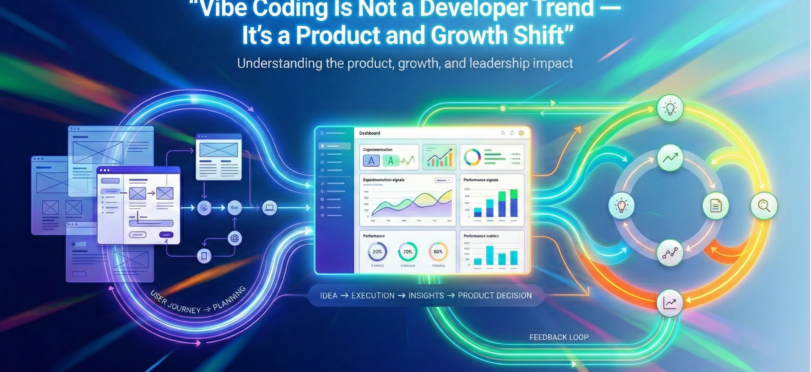
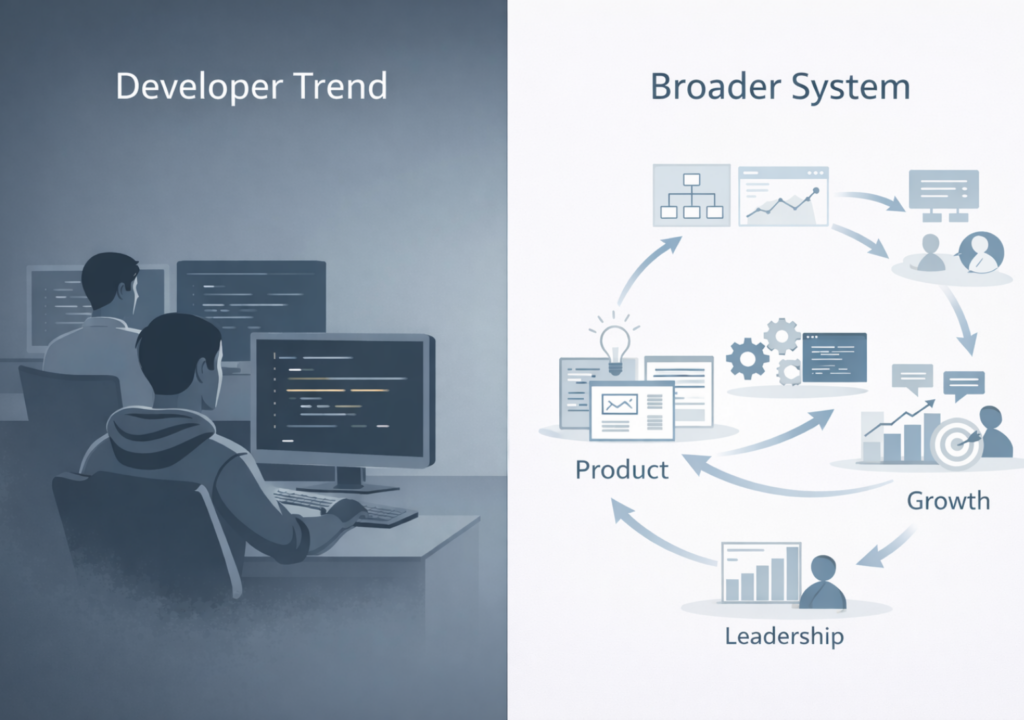
Vibe coding is increasingly visible across modern product teams, but it is often misunderstood as a developer trend rather than a product and growth shift.
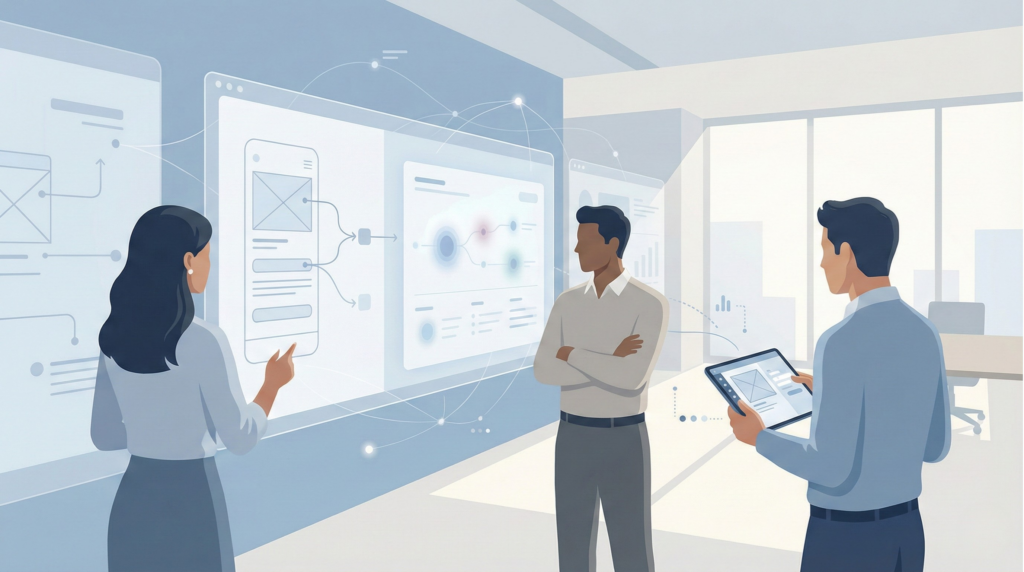
Introduction: Why Vibe Coding Is Suddenly Everywhere
Vibe Coding did not appear overnight.
It surfaced quietly across product teams, startups, and internal tools.
What changed recently is visibility.
AI-assisted tools lowered the friction between ideas and execution.
Executives started seeing demos earlier.
Product managers started shipping prototypes without waiting cycles.
Founders started validating ideas before funding decisions.
This visibility created confusion.
Many labeled Vibe Coding as a “developer shortcut” or a “coding trend.”
That framing misses the real shift.
Vibe Coding is not about writing code faster.
It is about collapsing distance between intent, execution, and learning.
This is a product and growth transformation.
Not a developer movement.
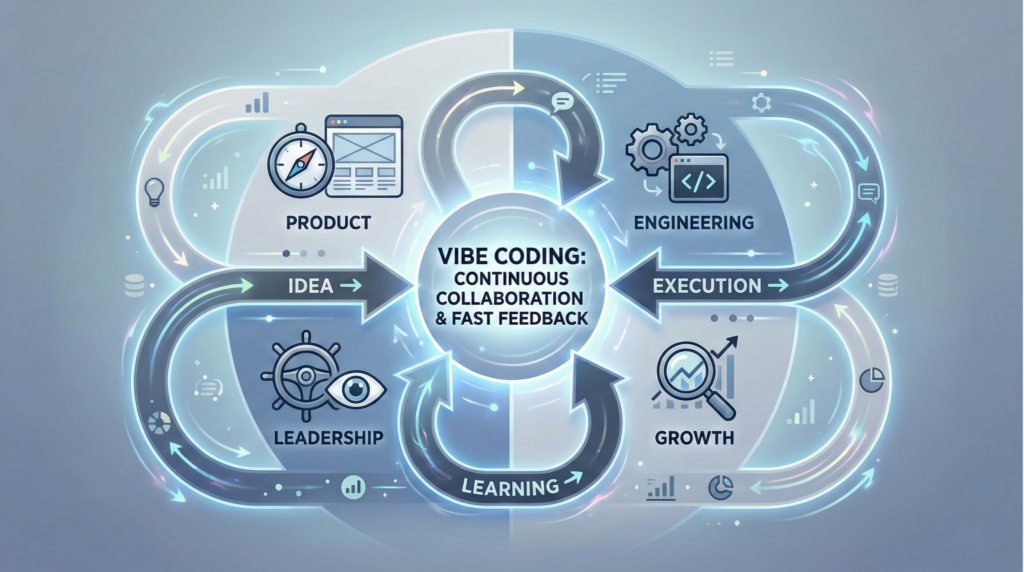
What Vibe Coding Really Means (Beyond AI-Assisted Coding)
Vibe Coding is often reduced to AI tools generating code.
That definition is incomplete.
At its core, Vibe Coding is a workflow mindset.
It prioritizes:
- Outcome over implementation purity
- Learning speed over technical perfection
- Directional correctness over early optimization
The “vibe” is not randomness.
It is intent-driven execution with fast feedback.
Instead of asking, “Is this the best architecture?”
Teams ask, “Does this solve the right problem?”
Instead of waiting for full specifications,
teams test assumptions in days, not quarters.
AI is an enabler, not the essence.
The real change is decision velocity.
Vibe Coding shifts teams from:
Planning → Building → Launching
to:
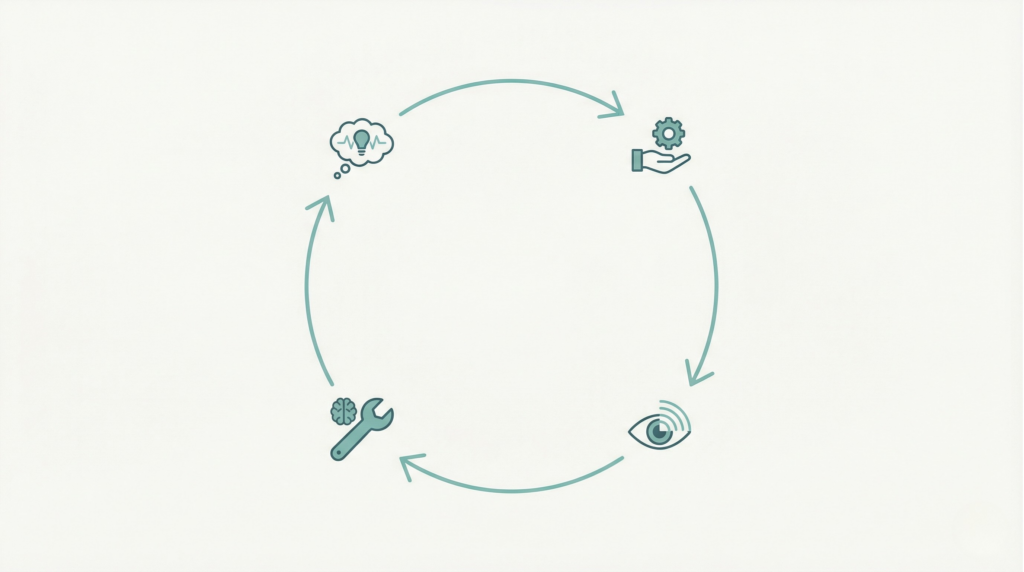
Hypothesis → Execution → Signal → Adjustment
This loop defines modern product thinking.
Why Calling It a “Developer Trend” Is Misleading
Labeling Vibe Coding as a developer trend creates risk.
It narrows responsibility to engineering teams.
In reality, developers are only one node.
The real drivers are:
- Product discovery pressure
- Market uncertainty
- Shorter competitive cycles
- Faster customer expectation shifts
Developers did not invent this shift.
Markets forced it.
When iteration cycles shrink,
organizational roles must adapt.
Product teams now require:
- Faster validation
- Earlier signals
- More frequent decisions
Vibe Coding emerged because traditional workflows could not keep up.
Calling it a developer trend leads leaders to:
- Over-focus on tools
- Ignore process change
- Miss strategic implications
This is not about who writes code.
It is about who learns fastest.
Impact on Product Discovery and Experimentation
Product discovery has always been expensive.
Time, coordination, and dependency slowed learning.
Vibe Coding compresses discovery cycles.
Product managers can now:
- Prototype flows
- Test logic paths
- Validate assumptions visually
This reduces reliance on documentation-heavy validation.
Experiments become tangible earlier.
Stakeholders react to real artifacts, not slides.
This matters because feedback quality improves with concreteness.
Instead of debating hypotheticals,
teams observe behavior.
Vibe Coding also changes experiment volume.
When cost drops, experimentation increases.
More experiments lead to:
- Better prioritization
- Faster problem-solution fit
- Reduced sunk-cost bias
Discovery becomes continuous, not phase-based.

Impact on Growth Velocity and Feedback Loops
Growth teams depend on iteration speed.
Traditional development slowed growth learning.
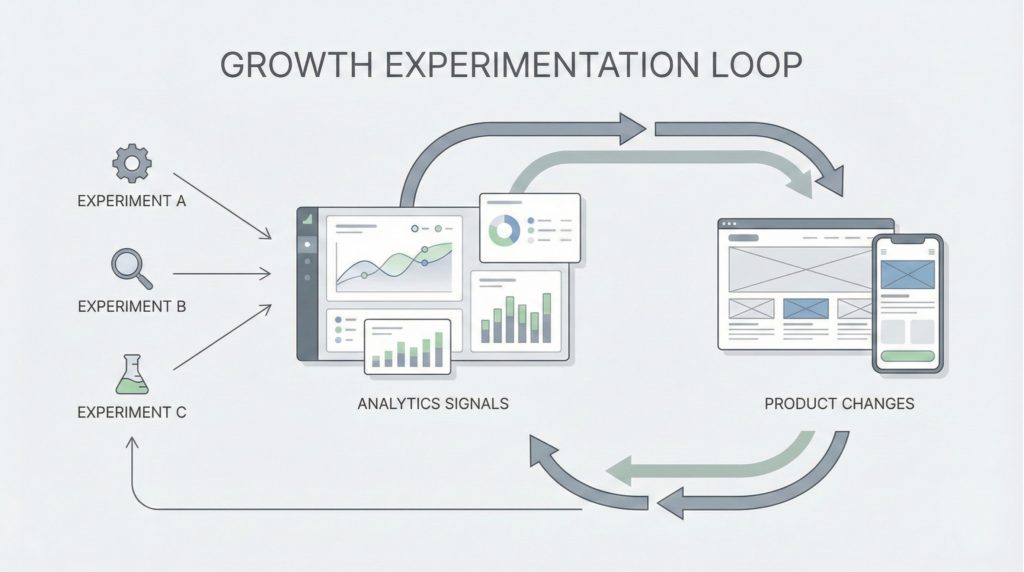
Vibe Coding removes friction from growth experimentation.
Landing pages, onboarding flows, feature toggles, and pricing tests
can be built and modified rapidly.
This changes feedback loops fundamentally.
Signals arrive earlier.
Decisions are reversible.
Growth becomes less about big launches
and more about controlled momentum.
Importantly, this does not eliminate rigor.
It reallocates rigor to interpretation, not execution.
Teams spend less time shipping
and more time understanding impact.
This is where growth maturity increases.
Vibe Coding aligns with modern growth models:
- Continuous experimentation
- Small bets
- Fast rollback
Impact on Product Managers and Tech Leaders
Vibe Coding changes leadership expectations.
Product managers are no longer only requirement translators.
They become experiment designers.
They must:
- Frame problems precisely
- Define success signals
- Interpret noisy feedback
Technical leaders face a parallel shift.
Architecture decisions now balance flexibility and speed.
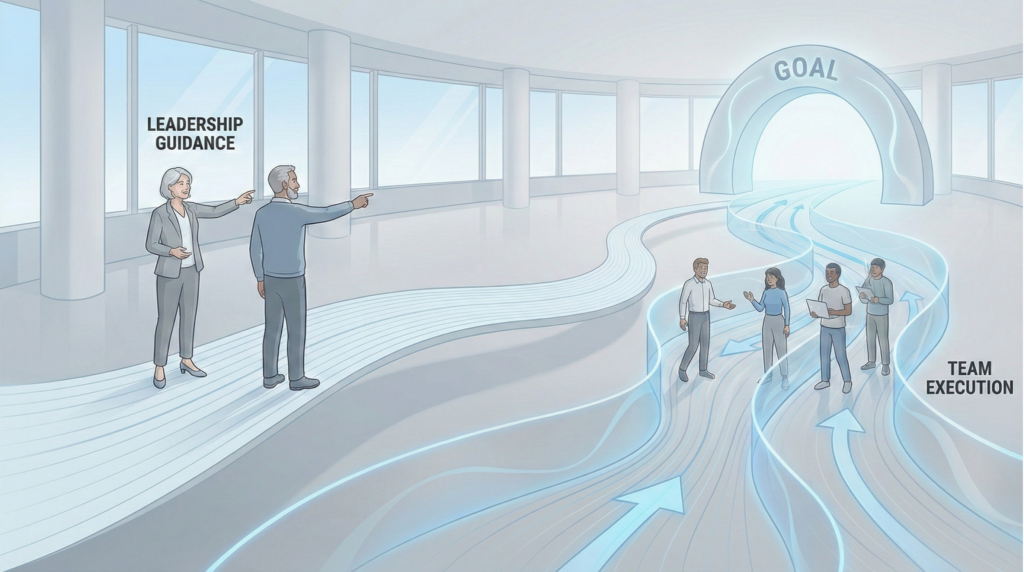
Guardrails matter more than control.
Leadership moves from approval to enablement.
Key mindset changes include:
- Trusting smaller experiments
- Accepting imperfect early outputs
- Optimizing for learning rate
This requires psychological safety.
Teams must feel safe to try and discard.
Vibe Coding exposes leadership maturity quickly.
Organizations that over-control stall.
Organizations that guide accelerate.
Risks, Limitations, and Where Vibe Coding Breaks
Vibe Coding is not universal.
Used blindly, it creates real problems.
Common failure modes include:
- Accumulating technical debt
- Blurred ownership
- Shallow problem framing
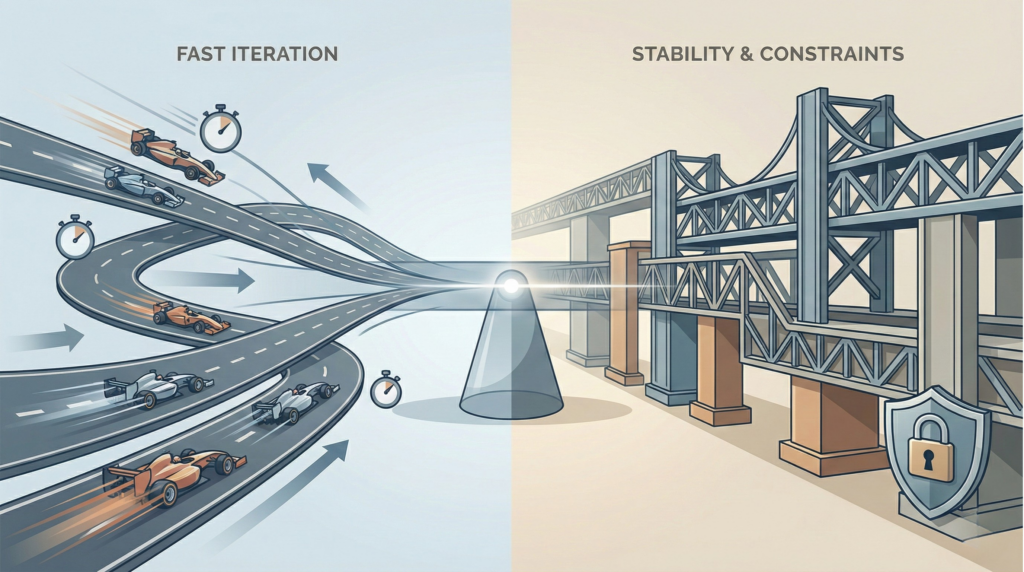
Not all systems tolerate rapid experimentation.
Regulated domains require stricter controls.
Scaling products still need architecture discipline.
Vibe Coding does not replace engineering fundamentals.
Another risk is false confidence.
Fast demos can mask weak assumptions.
Without strong product thinking,
teams may ship quickly in the wrong direction.
The constraint is not tools.
It is judgment.
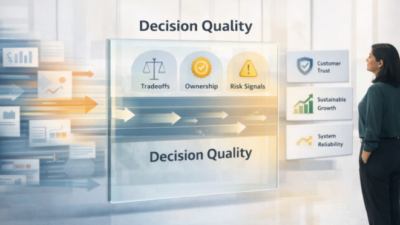
Vibe Coding amplifies decision quality — good or bad.
Leaders must know where speed helps
and where stability matters more.
What Leaders Should Do Differently
Leaders must shift from tool adoption to system design.
Key actions include:
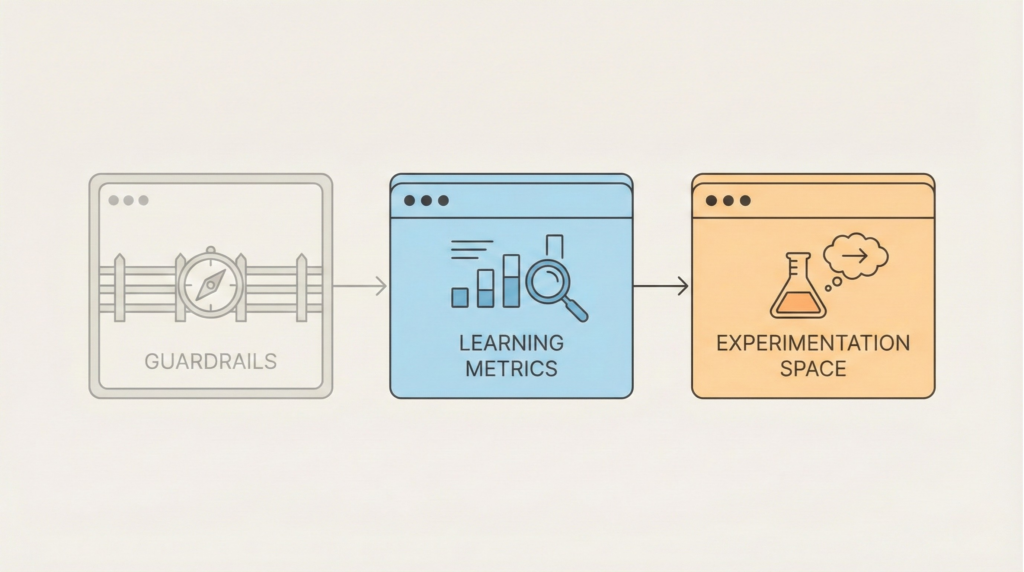
Redefine success metrics
Measure learning speed, not output volume.
Create experimentation budgets
Time and scope for reversible work.
Establish guardrails, not gates
Standards that guide without blocking.
Upskill product judgment
Tools amplify thinking. Weak thinking scales poorly.
Normalize discard cycles
Killing experiments early is progress, not failure.
Most importantly, leaders must protect focus.
Vibe Coding thrives with clarity, not chaos.
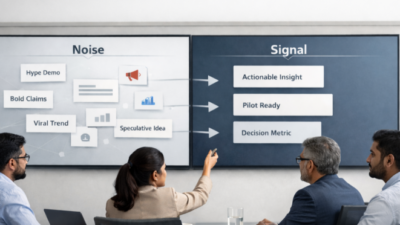
Without direction, speed becomes noise.
The Future Outlook for Product Teams
Vibe Coding is an early signal, not a destination.
Future product teams will be defined by:
- High decision velocity
- Tight feedback loops
- Cross-functional fluency
The separation between “idea” and “execution” will continue to shrink.
Roles will not disappear.
They will converge around problem-solving.
Teams that master this shift will:
- Outlearn competitors
- Reduce waste
- Build more relevant products
Those who treat Vibe Coding as a fad
will miss the deeper transformation.
This is not about coding differently.
It is about building organizations that learn faster than markets change.
That is the real shift.